Côtes du Rhône: History, Appellations, Crus, Grape Varieties and Exceptional Terroirs
The Côtes du Rhône are among the most iconic wine appellations in France. Rooted in a thousand-year history and shaped by an exceptional diversity of terroirs, grape varieties and wine styles, this great Rhône Valley appellation appeals to lovers of red wines, white wines and rosé wines all over the world. The second-largest French AOC vineyard by area, it embodies a unique balance between tradition, expertise and innovation.
A Thousand-Year History in the Heart of the Rhône Valley
The history of the Côtes du Rhône dates back to Antiquity. Vines appeared in the southern Rhône Valley during the Greek period, around the 4th century BC, before gradually spreading northwards with Roman expansion in the 1st century AD. The Romans played a decisive role in the development of Rhône viticulture: structured vineyard planting, advanced winemaking techniques and the organisation of wine trade along the Rhône River.
After the fall of the Roman Empire, viticulture survived through trade with Mediterranean ports and the supply of major cities such as Lyon. During the Middle Ages, the Church became a key player. The establishment of the papal court in Avignon in the 14th century marked a decisive turning point: the popes, great lovers of wine, encouraged the planting and development of vineyards in the surrounding area. This period contributed significantly to the growing reputation of several major terroirs.
Official recognition came gradually. In 1737, a royal decree required barrels of superior-quality wine to be marked with the designation CDR and the vintage year, laying the foundations for the concept of controlled origin. Despite the phylloxera crisis in the 19th century, the vineyard was rebuilt and expanded onto more resistant soils, further strengthening the diversity of the terroirs of the Côtes du Rhône.
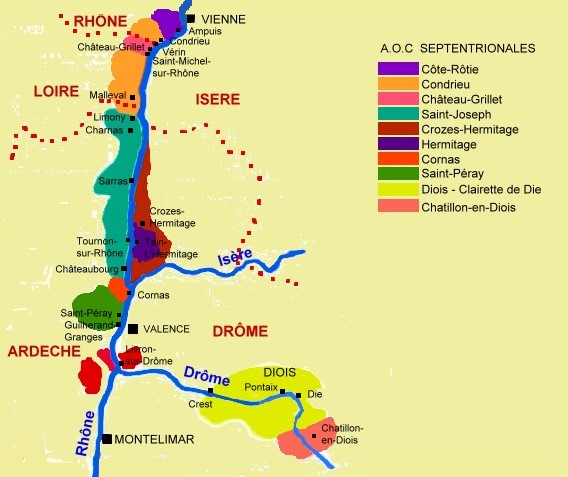
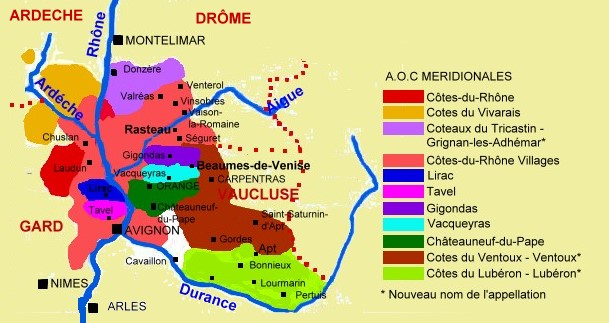
A Wine Region Structured Between North and South
The Rhône Valley stretches for more than 200 kilometres between Vienne and Avignon, crossing six departments. It is traditionally divided into two major wine-growing areas:
The Northern Rhône
Located between Vienne and Valence, the Northern Rhône is characterised by a narrow valley nestled between the Massif Central and the Alps. The climate is temperate, with marked continental influences. Vineyards are often planted on steep terraces, producing precise, structured and elegant wines. The wines are frequently single-varietal, particularly Syrah-based reds and Marsanne or Roussanne-based whites.
The Southern Rhône
From Montélimar to Avignon, the Southern Rhône opens onto Provence and benefits from a warmer and sunnier Mediterranean climate. The Mistral, the region’s emblematic wind, plays an essential role by keeping the vines healthy and enhancing the aromatic concentration of the grapes. Here, blending is king, producing sunny, generous and expressive wines.
Appellation, Hierarchy and Crus of the Côtes du Rhône
The Côtes du Rhône appellation was officially established in 1937, making it one of France’s earliest AOCs. It is based on a clear quality hierarchy, providing consumers with transparency and a guarantee of quality.
Côtes du Rhône AOC: a regional appellation, accessible and representative of the Rhône wine style.
Côtes du Rhône Villages: a higher level, with stricter regulations and a stronger expression of terroir.
Côtes du Rhône Crus: the highest level of the quality pyramid, with each Cru expressing its own identity, without the words “Côtes du Rhône” appearing on the label.
There are currently 18 Côtes du Rhône Crus, spread across the northern and southern parts of the valley. Each has unique characteristics linked to its terroir, climate and dominant grape varieties. This diversity is at the heart of the richness and international reputation of the Rhône wine region.
Diverse Terroirs: The Foundation of Wine Identity
The terroir of the Côtes du Rhône is distinguished by an exceptional geological mosaic, which directly influences the style and personality of the wines:
Clay soils: colourful, rich wines with pronounced tannins.
Stony soils: powerful, structured wines with good ageing potential.
Limestone soils: lighter, aromatic and elegant wines.
Granite soils: fine, balanced wines with beautiful freshness.
Sandy soils: supple, delicate and low-tannin wines.
This diversity allows winegrowers to produce a broad range of red, white and rosé wines, each faithfully expressing its place of origin.
The Grape Varieties of the Côtes du Rhône: Unique Aromatic Richness
Grape varieties are at the heart of the identity of the Côtes du Rhône. They are divided into principal and complementary varieties.
Principal Grape Varieties
Grenache: brings roundness, warmth and aromas of ripe fruit.
Syrah: provides structure, intense colour and spicy notes.
Mourvèdre: contributes depth, tannins and ageing potential.
Complementary Grape Varieties
Bourboulenc, Cinsault, Carignan, Clairette, Marsanne, Roussanne and Ugni Blanc further enrich the blends. They bring freshness, aromatic finesse and complexity, helping to balance the power of the dominant varieties.
Red, White and Rosé Wines: A Complete Palette
Red wines account for the majority of Côtes du Rhône production. They are distinguished by their diversity: fruity and supple in their youth, or more structured and complex in the case of Crus intended for ageing.
White wines appeal with their freshness, floral and fruity aromas, and beautiful roundness on the palate. Rosé wines, meanwhile, offer a generous and refreshing expression, perfectly suited to the Mediterranean climate.
The Côtes du Rhône Today: Tradition and Modernity
Driven by demanding specifications and a growing focus on the environment, the Côtes du Rhône appellation is a wine region in constant evolution. Winegrowers combine respect for terroir, innovation and the transmission of expertise to produce authentic wines that faithfully reflect the Rhône Valley.
Thanks to the richness of its Crus, the diversity of its appellations, the variety of its grape varieties and the excellence of its terroir, the Côtes du Rhône remain an essential reference within French and global wine heritage.
The Alain Jaume Family: The Soul of the Côtes du Rhône Between Tradition and Excellence
At the heart of the Rhône Valley, the Alain Jaume family embodies the spirit of the Côtes du Rhône through demanding viticulture, respect for terroirs and a commitment to elegant wines. The estate benefits from a rare and precious asset: vineyards ideally located on the edge of the Châteauneuf-du-Pape appellation, on iconic rolled-pebble soils. This geographical and geological proximity gives the cuvées a distinctive identity, at the crossroads of two great expressions of the Rhône Valley.
Les Champauvins: A Unique Character Born from Rolled Pebbles
The Côtes du Rhône “Les Champauvins” draws its personality from soils composed mainly of rolled pebbles, identical to those found in Châteauneuf-du-Pape. These stones, capable of storing heat during the day and releasing it at night, promote optimal grape ripening, beautiful aromatic concentration and harmonious structure.
The blend is based on the emblematic grape varieties of the Côtes du Rhône:
Grenache, the dominant variety, providing roundness, generosity and ripe red fruit aromas,
Syrah, bringing aromatic freshness, spicy notes and depth,
Mourvèdre, contributing structure, complexity and length on the palate.
This balance gives rise to fine and elegant wines, characterised by a fruit-driven structure and a subtly spicy finish, a signature of the terroir and the family’s expertise.
Les Champauvins: A 100% Viognier White Côtes du Rhône, Harvested for Freshness
The range also includes a 100% Viognier white Côtes du Rhône, made from carefully selected parcels and harvested to preserve freshness. This harvesting approach preserves the grape variety’s aromatic brightness: floral notes, white-fleshed fruit and vibrant freshness. The wine charms with its balance between generosity and tension, offering a luminous and elegant expression of Rhône Valley Viognier.
Domaine Grand Veneur: Signature Red and White Cuvées
Domaine Grand Veneur also produces its own Grand Veneur red and white cuvées, true expressions of the family’s philosophy.
In red, the blend is dominated by Grenache, complemented by Syrah and Mourvèdre, producing structured yet balanced wines where rich fruit meets controlled freshness.
In white, the pursuit of harmony and aromatic precision results in elegant, expressive wines that are perfectly suited to gastronomy.
A Complementary Range Focused on Freshness and Elegance
Beyond its flagship cuvées, the Alain Jaume family develops complementary wines guided by a clear philosophy: preserving beautiful aromatic freshness, offering fruity profiles supported by a spicy touch on the finish, without ever compromising finesse. This approach results in accessible, precise and refined wines that remain faithful to the identity of the Côtes du Rhône.
Consistent Recognition
The estate’s rigorous work is regularly recognised by critics and wine professionals. The Alain Jaume family’s wines are frequently awarded prestigious distinctions, including Coups de Cœur in the Guide Hachette and medals at recognised competitions, notably the Concours des Vins d’Orange. These awards testify to the consistent quality and excellence of the family’s expertise.
Thanks to exceptional terroirs, mastery of Rhône grape varieties and a constant pursuit of balance, the Alain Jaume family produces Côtes du Rhône with a distinctive style: elegant, fresh, fruity and deeply rooted in their terroir.