Shopping Cart
There are no more items in your cart
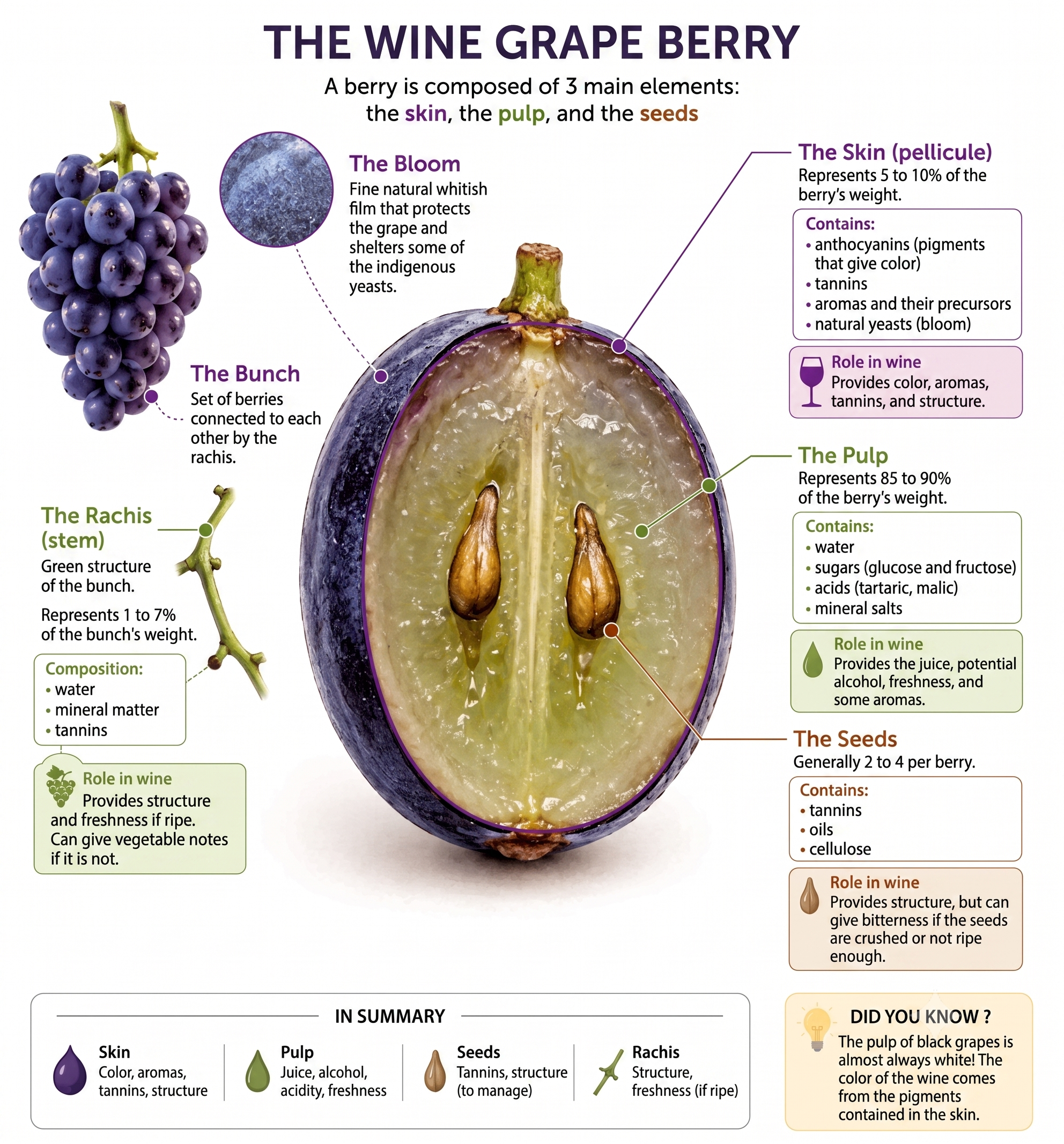
🍇 The Biological Composition of a Wine Grape
The grape is the raw material used to produce wine. Each part of the berry has a specific composition that directly influences the wine's colour, aromas, structure and overall balance.
A grape cluster consists of multiple berries attached to a central stem (the rachis). Each berry is composed of four main parts: the skin, the pulp, the seeds, and the bloom.
The Skin
The skin represents approximately 5–10% of the berry's weight. Although very thin, it is one of the most important components in winemaking.
It is covered by a fine waxy coating called the bloom, which naturally protects the grape and provides a habitat for the indigenous yeasts naturally present on the fruit.
The skin contains:
- Anthocyanins, the pigments responsible for the colour of black grapes and red and rosé wines;
- Tannins, which contribute structure, texture and ageing potential;
- A large proportion of the grape's aroma precursors, released during fermentation.
👉 The longer the juice remains in contact with the skins, the more colour, tannins and aromas are extracted.
The Pulp
The pulp accounts for approximately 85–90% of the berry's weight.
It is mainly composed of:
- Water;
- Sugars (glucose and fructose);
- Organic acids, primarily tartaric acid and malic acid;
- Mineral salts.
During alcoholic fermentation, the sugars contained in the pulp are converted into alcohol by the yeasts.
Contrary to popular belief, the pulp is almost always clear and colourless, even in black grape varieties. This is why white wine can be produced from black grapes when the juice is quickly separated from the skins.
👉 The pulp provides the wine with its juice, alcohol, balance between sweetness and acidity, and part of its aromatic expression.
The Seeds
A grape berry generally contains two to four seeds.
They contain:
- Tannins;
- Oils;
- Cellulose.
Seed tannins are particularly harsh when the grapes are not fully ripe. If the seeds are crushed during winemaking, they can impart vegetal, bitter or astringent characteristics to the wine.
👉 Proper grape ripeness is therefore essential to obtain softer, more harmonious tannins.
The Stem (Rachis)
The rachis is the green framework of the grape cluster that connects all the berries together. It generally represents 1–7% of the cluster's weight.
It mainly contains:
- Water;
- Minerals;
- Tannins.
Before vinification, grapes are often destemmed, meaning the berries are separated from the rachis to avoid introducing excessive vegetal aromas or harsh tannins.
However, some winemakers choose to ferment all or part of the bunches with their stems. When perfectly ripe, the stems can contribute additional freshness, structure and complexity to the wine.
The Bloom
The bloom is the thin whitish coating naturally visible on the surface of the grapes.
This natural wax protects the berries from dehydration and hosts part of the indigenous yeast population that may participate in alcoholic fermentation.
Its presence is often considered a sign that the grapes have been carefully handled and are in excellent sanitary condition.
Composition of a Grape Berry
| Part | Main Components | Role in Wine |
|---|---|---|
| Skin | Anthocyanins, tannins, aroma compounds, indigenous yeasts | Colour, structure, aromas |
| Pulp | Water, sugars, acids, minerals | Juice, alcohol, freshness |
| Seeds | Tannins, oils | Structure (must be carefully managed) |
| Stem (Rachis) | Tannins, water, minerals | Structure and freshness (when retained) |
💡 Did You Know?
Contrary to popular belief, the pulp of black grapes is clear, not red.
Wine colour therefore does not come from the juice itself, but from the pigments contained in the grape skins.
The duration of skin contact determines the colour of the wine:
⚪ White wine: little or no skin contact.
🩷 Rosé wine: a few minutes to several hours of skin maceration.
🔴 Red wine: several days—or even several weeks—of maceration.
💡 Did You Know?
Not all grapes are grown for winemaking!
There are two main categories:
- Table grapes, grown for fresh consumption.
- Wine grapes, cultivated specifically for winemaking.
Wine grapes are generally smaller, with thicker skins and higher concentrations of sugars, acids and aromatic compounds.
By contrast, table grapes are larger, crisper, and less concentrated, making them more enjoyable to eat fresh.